When people think about a photo booth, they usually focus on the booth itself. But what actually determines how much it gets used isn’t just the booth — it’s where and how it’s placed within your event layout.
The difference between a booth that gets constant traffic and one that sits empty often comes down to guest flow, visibility, and timing. If you want packed galleries, nonstop sessions, and real energy around the booth, placement matters just as much as the experience.
If you’re still deciding on booth types or features, you can explore options here:
Start With Guest Flow — Not Empty Space
The biggest mistake in photo booth placement is treating it like an afterthought. It ends up in a corner, tucked behind tables, or placed wherever space is “left over.”
Instead, think about where guests naturally move throughout the event.
High-performing placements usually include:
- Near the bar
- Along the path between cocktail hour and reception
- Adjacent to the dance floor (not directly on it)
- Near entrances to high-traffic rooms
The goal is simple: your booth should be seen without being searched for.
Visibility Drives Participation
If guests can’t immediately tell what the setup is, they’re less likely to use it.
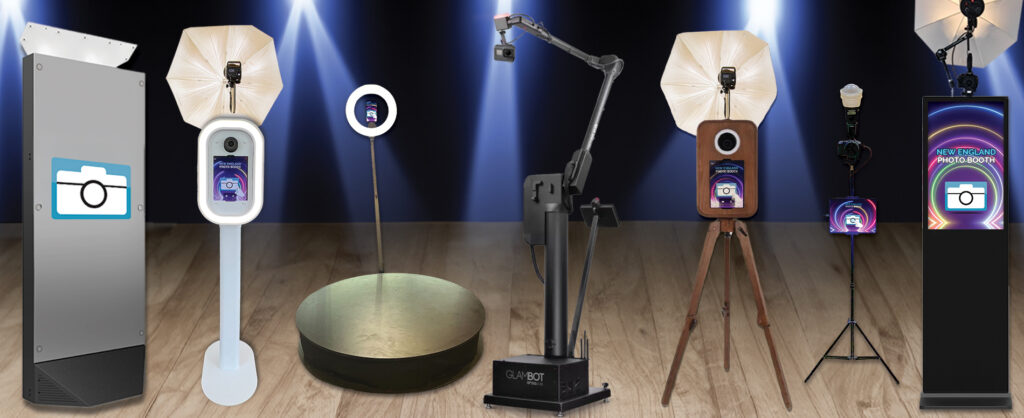
Booths like the LuxPod or Mirror Booth naturally stand out because of their presence and lighting.
Match Placement to Booth Type
Different booths perform better in different layouts. Positioning should reflect how each one is used.
Open Air / Photo Tower (High Capacity)
Best for large events where volume matters. These setups can handle big groups (10+ guests per shot) and keep lines moving quickly.
→ Place near open areas with room for lines to form without blocking flow
LuxPod / Flashback / Mirror (Premium Experience)
These booths are more about quality, aesthetic, and intentional moments
→ Place in a visually appealing area (near décor, lighting, or backdrop focal points)
360 Booth / GLAMBOT (Experience-Driven)
These are attractions, not just booths
→ Give them space and position them where guests can watch — visibility creates demand
Roaming Booth (Flow-Based)
Instead of placement, this booth follows the crowd
→ Use it to fill gaps where guests aren’t naturally moving toward a fixed setup
The key is aligning booth behavior with event layout, not forcing every booth into the same position.
Avoid Bottlenecks (and Dead Zones)
Bad placement can actually hurt your event flow.
Things to avoid:
- Blocking pathways or exits
- Creating long lines in tight spaces
- Placing booths too far from main activity
- Isolating the booth in a separate room
Even the best booth won’t perform if guests have to “commit” to leaving the event to use it.
On the flip side, booths placed too close to the dance floor can feel chaotic or get ignored during peak moments. The sweet spot is close enough to feel connected, but far enough to function smoothly.
Small Layout Tweaks That Make a Big Difference
A few simple adjustments can dramatically increase usage:
- Face the booth toward traffic, not away from it
- Leave space for groups to gather before/after sessions
- Keep props accessible and visible
- Use signage or a quick announcement to draw attention early
- Avoid placing seating directly in front of the booth
These details seem small, but they remove friction — and participation is all about reducing friction.
The Bottom Line
A photo booth doesn’t create energy on its own — it amplifies what’s already happening.
The right placement:
- Makes it visible
- Makes it easy to use
- Makes it feel like part of the event
And when that happens, you don’t have to convince guests to use it — they naturally do.
If you’re unsure what setup or layout works best for your event, start by exploring your options and matching the booth to your space:
Because the right booth in the right place doesn’t just take photos — it becomes one of the most used parts of your entire event.